Fauna of the Yukon
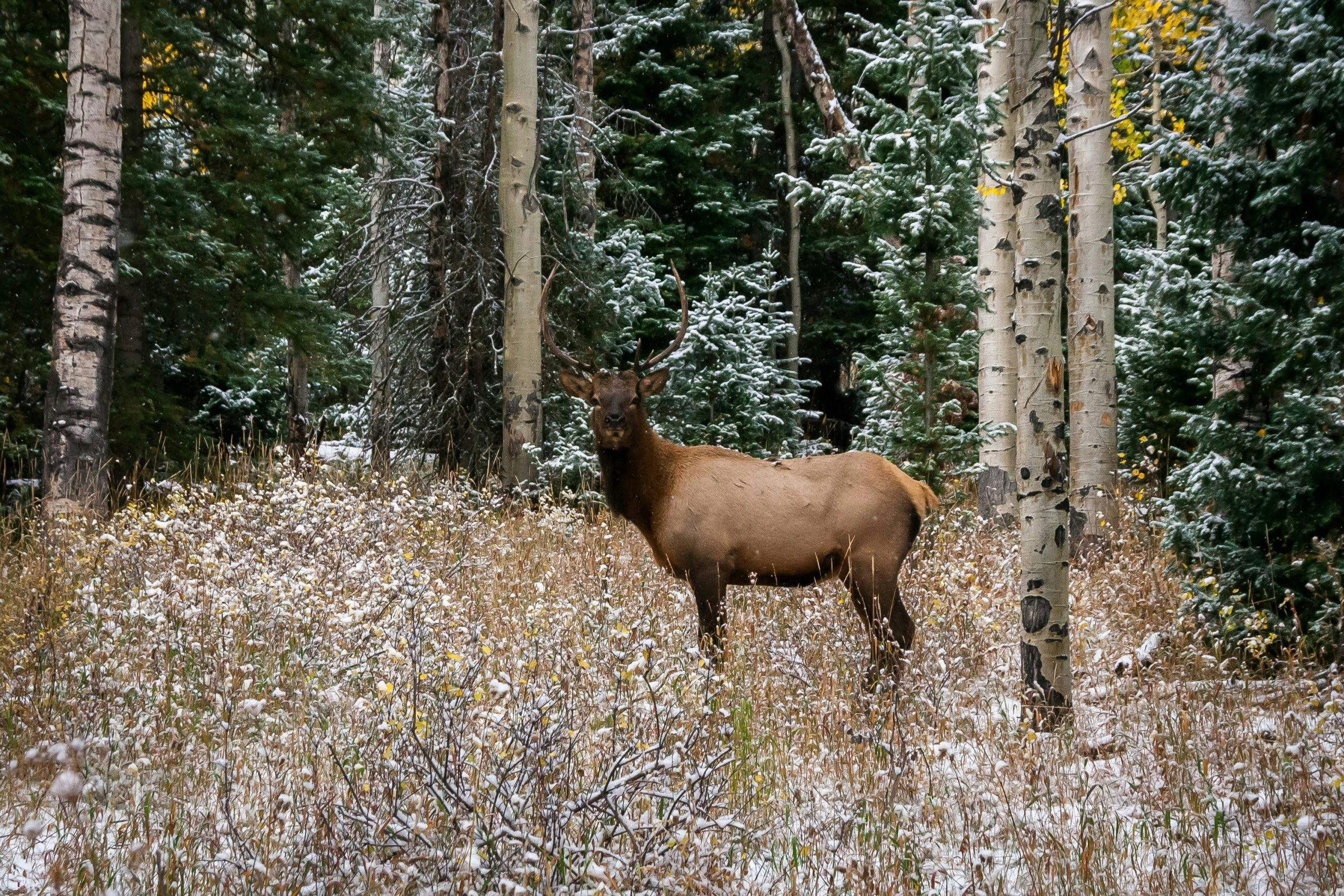
The Yukon is home to hundreds of different species of animals, from flocks of migratory ducks to massive herds of caribou. The boreal forests, mountain alpines, arctic tundra, and coastal plains that make up the Yukon host an incredibly diverse set of birds, mammals, insects, amphibians, and more.
Birds
About 87% of all the birds found in the Yukon are migratory, spending the winter in the warm south. A few hardier birds live in the Yukon-year round, even as snow blankets the ground and drives insects, small animals, and other food sources into hiding. These resident birds are the ones you’ll be most likely to spot on Expedition Aurora, and are a treat for any birdwatcher.
The Rock Ptarmigan (Lagopus muta) is one such resident bird. With a beautiful white plumage that blends into the snow, they can be hard to spot, save for the bright redeye comb worn by males. During the winter, they feed on plant buds and seeds, and dig burrows into the snow to roost in and hide away from the freezing cold. Rock ptarmigans are the official territorial bird of Nunavut, Canada, and the official game bird of Newfoundland and Labrador.
The Northern Goshawk (Accipiter gentilis) is another resident of the Yukon, living year-round in old-growth forests. Fierce, wild, and aggressive, the Northern Goshawk have a long tail, gray plumage, and bold white stripes over their piercing red or orange eyes. They are very secretive and rarely seen, but that may be for the better: they are viciously defensive of their nests, and have been known to attack humans that wander too close.
The Great Horned Owl (Bubo virginianus) is perhaps the most exciting bird to spot in the Yukon. With a deep hooting call, twin horns on their heads, and wide, intimidating yellow eyes, the Great Horned Owl is the quintessential bird of myth and legend. Their nocturnal hooting can be heard year-round throughout North American and parts of South America, particularly in dense forests. In the Yukon, their primary prey are Snowshoe Hares, but as food becomes scarce, they will also hunt muskrats, ducks, and even other birds of prey.
Carnivores
Ungulates
Ungulates, or mammals with hooves, are spread throughout the Yukon and divided into two types: cervidae, or antler-bearing ungulates like deer, moose, and elk, and bovidae, or horned ungulates like goats and sheep. Ungulates are entirely herbivorous, feeding on leaves and shrubs or grazing on grasses. Some live solitary lives, while others form massive herds to protect themselves and their young from predators.
The Mule Deer (Odocoileus hemionus) is one such ungulate that lives in the Yukon. With tan fur, small tail, and medium build, the Mule Deer looks very similar to the White Tail Deer (Odocoileus virginianus) found throughout North America. Mule Deer can be identified by their large, mule-like ears, prominent white rump patch, and forked antlers. Mule Deer are easily found in the Takhini and Yukon River Valleys near Whitehorse, grazing on flowers, shrubs, and berries.
The Dall’s Sheep (Ovis dalli dalli) is the most common sheep found in the Yukon. Typically all- white with large, curling horns, the Dall’s Sheep is one of three types of Thinhorn Sheep. They spend their spring and summer grazing in alpine meadows throughout the Yukon, before migrating to warmer, south-facing mountains for the winter. They use these same migration routes for generations, and give birth along the same mountains that they themselves were born at.
Moose (Alces americanus) are the largest and perhaps most well-known of the ungulates found in the Yukon. They dominate the forests, standing over 6 feet tall and weighing over 1,000 pounds. Like other deer, Moose grow antlers, and their size and symmetry indicate health, dominance, and strength. They can be found across the Yukon, though are most likely to be found along rivers and lakes further from human civilization.
At-Risk Species
While the Yukon may be home to at least 10,000 animal and plant species, there are some at risk of extinction. Species at-risk are plants and animals whose numbers in the wild have dwindled alarmingly low, for one reason or another. Protecting these species and their habitats is important, to keep the species from going extinct and further upsetting the balance of nature.
The Horned Grebe (Podiceps auritus) is one such at-risk species. Horned Grebes are ducks with a striking plumage and silhouette, with bold black-and-red feathers and bright yellow or red ‘horns’ that they can raise or lower at will. Horned Grebes are a migratory bird, and nest in the Yukon to breed. Sadly, their population in the wild has declined by 79% in North America over the last three decades, mostly due to human actions disturbing and degrading their breeding sites.
The Wolverine (Gulo gulo) is another species at risk of extinction. Stocky and muscular, these weasels typically scavenge carrion, they have also been known to prey on smaller mammals, birds, and even young bison or moose. Wolverines have an enormous habitat range, sometimes spanning over 200 miles of territory. As such, they lose much of this territory to human activity, including roads, which they avoid and rarely cross. Their low density and secret nature makes them difficult to track, so exact numbers are unknown, even if Wolverine populations are believed to be stable.