The Klondike Gold Rush
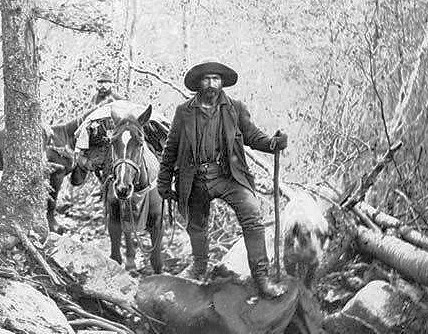
The Klondike Gold Rush, sometimes known as the Alaska Gold Rush, took place from 1896 to 1899. Over the course of three short years, it created and destroyed communities, made people rich and broke, and brought the Yukon into popularity for the first time and left a legacy that has been immortalized in film, literature, and music.
Discovering Gold
For thousands of years, Native Hän and Tagish people traded primarily in copper, and were largely unaware and uninterested in the vast gold deposits beneath their feet. European prospectors had been traveling throughout the Yukon territory for several decades prior to the Gold Rush, with only some luck. Then, on August 16, 1896, 1898 when American prospector George Washington Carmac, his friend Keish “Skookum Jim”, and Keish’s nephew K̲áa Goox̱ “Dawson Charlie” were prospecting along one of the Yukon River’s tributaries and discovered something shining in the water. Who officially discovered the gold is a matter of debate: Keish and K̲áa Goox̱ both claimed Kiesh found it first, while Carmac claimed he did. Whatever the case, the trio agreed Carmac would receive official credit because they didn’t believe the mining authorities would willingly recognize the claim of a native Tagish person.
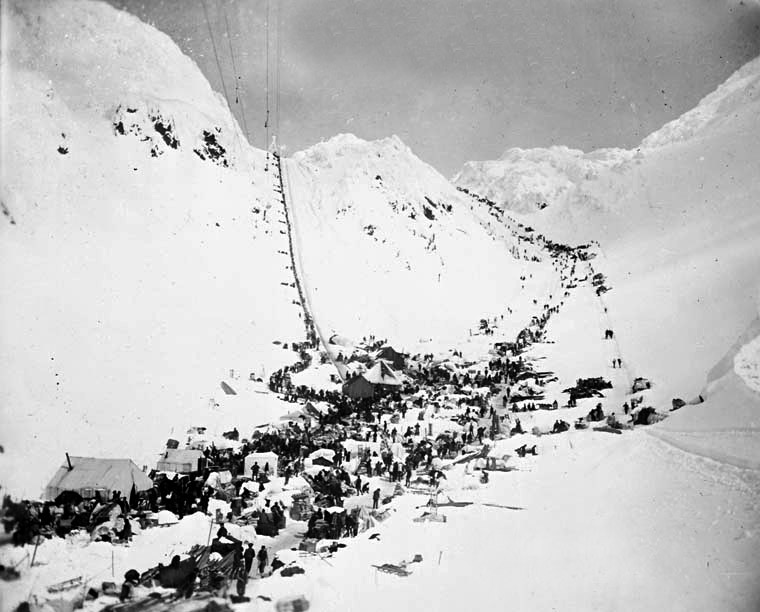
Word spread to local mining camps like wildfire. By the end of the month, all of the tributary had been claimed by prospectors. By Christmas, news reached Circle City, a log town 300 kilometers away. Many prospectors left the city immediately, despite the harsh Yukon winter, to try and grab up the best claims. The Gold Rush exploded when news hit San Francisco and Seattle. The Seattle Post-Intelligencer proclaimed “Gold! Gold! Gold! Gold!” on July 17, 1897, as the first ships of prospectors and their findings returned from the Klondike. The promise of fabulous wealth soon spurned 100,000 prospectors to find their fortune in the north.
Life during the Rush
The wave of prospectors into the Klondike changed the face of the Yukon dramatically. Boomtowns appeared overnight. One of the most infamous was the port of Skagway, which grew from a few small homes to a town of thousands. Effectively lawless, Skagway was dominated by alcohol, prostitution, and gunfire. Canadian Mounted Police Superintendent Sam Steele claimed that Skagway was “little better than a hell on earth… about the roughest place in the world”. In 1898, Jefferson Randolph “Soapy” Smith and his gang of 300 effectively took over the town, cheating and stealing from prospectors until he was killed in a shootout later that year.
Scarcity was a constant issue with the remoteness of the country. In the city of Dawson, nails vital for construction work cost $28 per pound, or $1,084 in today’s money. The first fresh eggs that arrived in the spring of 1898 sold for $3 or $116 apiece. This scarcity, coupled with ramshackle housing and poor living conditions, led to serious hazards. Diseases like scurvy, dysentery, and malaria ran rampant. A breakout of typhoid in Dawson affected thousands. Even water was scarce in the middle of winter, leading to three major fires in the city of Dawson that destroyed 117 buildings and cost $1,000,000 in damage, or $38.7 million in today’s money.
Native people also suffered harshly during the Gold Rush. While Tlingit and Taglish people were able to benefit somewhat from the Gold Rush by acting as guides or selling supplies, the Hän people found few ways to prosper. Most of their hunting and fishing grounds were destroyed by mining, they were forcibly removed to reservations to make way for prospectors, and many died from contaminated water and smallpox.
The End of the Gold Rush
Ironically, the Klondike Gold Rush began to decline as the living situations improved. Telegraph wires and railroads made communication and transportation safer and easier. The towns of Skagway and Dawson had lost its rough-and-tumble atmosphere as the inhabitants adopted modern luxuries and more European sensibilities. The final nail in the coffin was when more gold was discovered elsewhere in Canada and Alaska, drawing prospectors away to seek new fortunes. By late 1899, the Gold Rush had ended.
Some towns, like Dyea and Circle City, became ghost towns. Some cities like Dawson City and Skagway declined, while the city of Whitehorse actually began growing as new mining opportunities opened up. Out of the 100,000 prospectors who tried to get rich, only a hundred actually found any real fortune, and only a few of those managed to keep it. George Carmac was one of these few, leaving the Yukon for Seattle and growing his fortune through real estate ventures, but never stopped prospecting, chasing the high of that first motherlode until it killed him. K̲áa Goox̱ spent his money extravagantly and ended up dying in an alcohol-related accident. His uncle Kiesh also spent generously and developed a drinking problem, but did create a trust with his fortune that benefited his daughter and later the indigenous people of the Yukon.
The culture of the Gold Rush remains to this day. Many travelers hike the Chilkoot Pass just as the first prospectors did, while others visit the ruins of ghost towns like Dyea. The saloons of “Soapy” in Skagway have been restored for visitors to the underworld, and Dawson City celebrates Discovery Day every August, to commemorate the start of the last great gold rush.