Whitehorse, YT
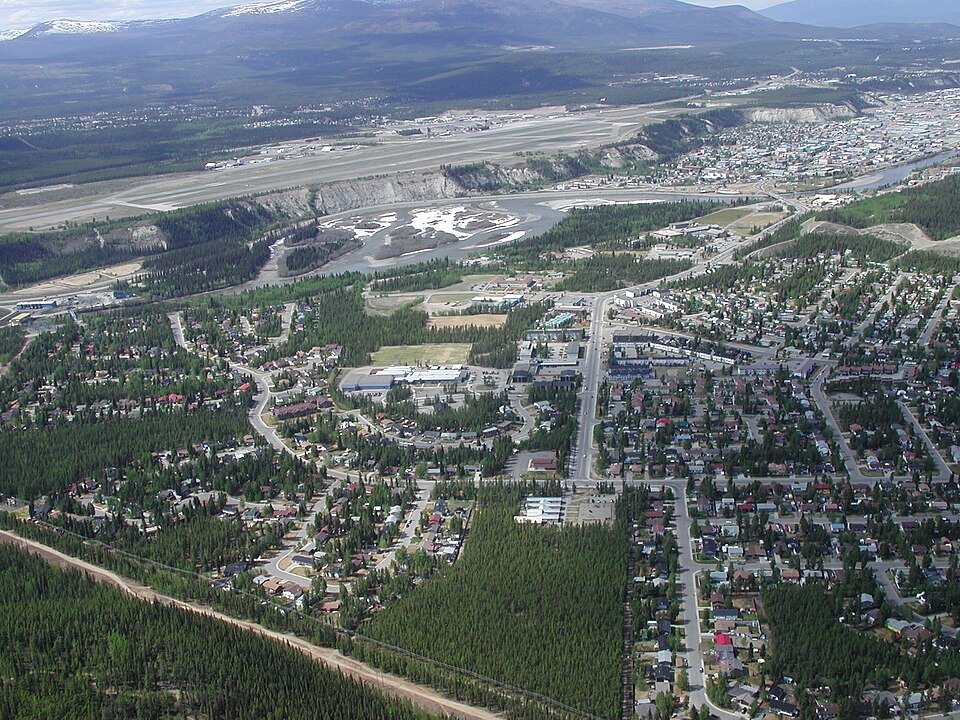
Whitehorse, Canada, is the gateway into the Yukon. The “Wilderness City” is capital of the Yukon Territory, and it lives up to its name with 8,000 kilometers of hiking trails, designated “Protected Areas” for motor vehicles to preserve the natural environment, and the #1 ranking in the world for cities with clean air.
The History of Whitehorse
This region of the Yukon River saw a lot of activity before European settlement. For thousands of years, First Nations used this site for seasonal fishing and traversing the river. Several portage trails, where boats and canoes were removed and carried by land, were documented to avoid the treacherous Miles Canyon Basalts and the White Horse Rapids that lay within the river.
European contact began in the early 19th century with the arrival of fur trappers, prospectors, and missionaries. The population first boomed in August 1896, when prospectors Skookum Jim, Tagish Charlie, and George Washington Carmack discovered gold near a tributary of the Yukon River. Once word began reaching other prospectors, some 100,000 people began making their way to the Klondike to stake their claims. While some of these early prospectors took a grueling hike over the Chilkoot Pass, steamships began ferrying people upriver in July 1897, stopping just before the White Horse Rapids.

The influx of miners and prospectors heading further north caused a serious bottleneck. Most prospectors had to lug their boats and goods around the rapids. Some tried to dare the rapids, losing their boats, and sometimes their lives, in the process. Other methods of transporting men, goods, and gold safely were soon developed, including a tramway that ran eight kilometers from the White Horse camp to Canyon City further upstream and a similar river tram. Construction on the White Pass and Yukon Route railway began in May 1898 and was completed in July 1900, further cementing White Horse as the heart of the Yukon.
White Horse quickly developed from a cluster of tents to a proper town. By 1901, the town boasted two thousand feet of warehouses, six hotels, three churches, two drugstores, an athletic club, and an electric light plant. By this time, most of the locals had been calling the town “White Horse” for years, due to the horselike appearance of the rapids nearby, though the railroad company attempted and failed to change the name of the town to that of the funders of the railway. The first flight into Whitehorse landed in 1920, ushering in a new era of travel to the town and even greater expansion. The development of the Alaska Highway during the Second World War brought about further growth and the decline of both railway and river transport.
Between 1941 and 1951, the city’s population had doubled. The headquarters of the Yukon Mounted Police was transferred to Whitehorse from Dawson in 1943, and the city began to diversify into mining, prospecting, transportation, and tourism. Whitehorse was officially incorporated in 1950, and on April 1, 1953, Whitehorse became the capital of the Yukon Territory.
Whitehorse Today
As of 2021, the population of Whitehorse is 28,200. The Whitehorse Rapids have been tamed by the Whitehorse Dam, and now lie beneath Schwatka Lake. The White Pass and Yukon Route railway closed in 1987 and reopened as a heritage railway. It now ferries passengers along the historical Gold Rush route, but still occasionally carries ore from mines deeper within the Yukon. The city now hosts many green tourism opportunities, with plans to double tourism revenue over the next ten years. Nevertheless, Whitehorse remains reliant on mines in the area, just as it did over a hundred years ago.